ORLANDO, FL — Florida was ranked No. 1 in the country for fatal crashes involving cyclists from 2020 through 2024, according to information from the National Highway Traffic Safety Administration. The five-year stretch has added urgency to safety concerns across Central Florida, where cyclists and advocates say roads need to be redesigned with people on bikes in mind.
The Florida Department of Transportation said the state recorded more than 37,000 bicycle crashes during that same period. FDOT data also shows that one in seven bicyclists struck by a motorist was killed or seriously injured, a figure that has sharpened concerns about how dangerous roads can be for riders.
Local cyclists say the numbers feel personal
For Kyle Markel, owner of Kyle’s Bike Shop in Orlando, the data hits especially hard because cycling is both his job and his hobby. He said the numbers are difficult to take in and could even discourage people from riding if they do not understand the risks and how to reduce them.
Markel said drivers and cyclists both need to stay alert, but he put particular emphasis on distracted driving. In his view, cellphones remain one of the biggest dangers on the road, and riders cannot assume motorists are watching for them. He said that means cyclists often have to be more cautious than they may want to be.
That caution affects the way he rides, too. Markel said he sometimes bikes to work, but he chooses longer routes when he believes they are safer.
A bike shop owner chooses the longer route when it is safer
Markel’s comments reflect the daily tradeoffs many cyclists face in places where traffic pressure is high. Rather than simply taking the most direct path, he said he will add a few extra miles if it gives him a better chance of avoiding dangerous stretches of road.
That habit underscores a broader point raised by local advocates: safe cycling is not only about individual caution. It also depends on whether streets, intersections and traffic patterns give riders enough room and visibility to travel without being exposed to unnecessary danger.
Markel’s message was straightforward. Drivers should not assume they will always notice cyclists in time, and cyclists should not assume they will always be noticed. The result, he suggested, is a constant need for awareness from everyone sharing the road.
Bike/Walk Central Florida says the road system favors cars
Emily Bush, executive director of Bike/Walk Central Florida, said the safety problem is tied in part to how many Florida communities were built. She said much of the Sun Belt grew rapidly after World War II, when development was centered on the automobile instead of on people walking, biking or using other forms of active transportation.
According to Bush, that design history still shapes daily travel in many places. Streets built around cars can leave cyclists and pedestrians with fewer protections, more difficult crossings and less forgiving intersections. Those conditions, she said, make it more likely that a mistake by a driver or rider becomes a serious crash.
Bike/Walk Central Florida works to improve conditions for people walking and biking. Bush said the group sees safer streets as a practical need, not just a long-term ideal.
Protected bike lanes and safer intersections are part of the fix
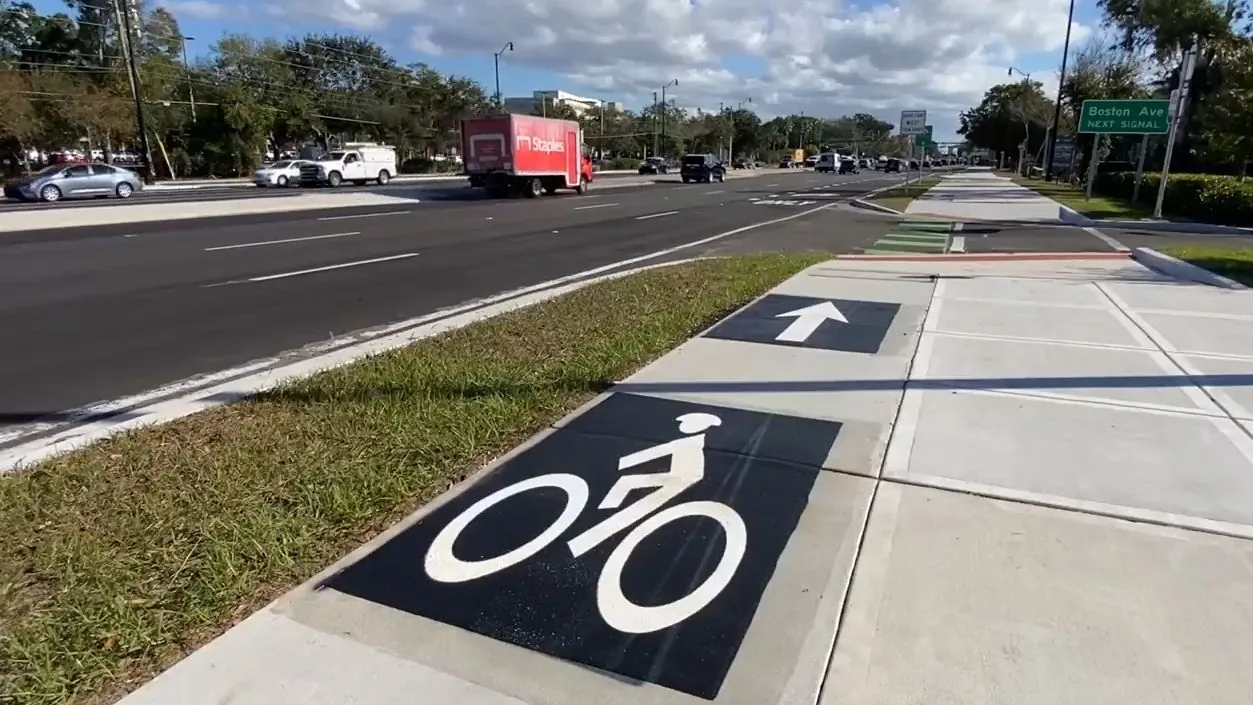
Bush said protected bike lanes and better intersections can help reduce severe and deadly crashes. Those kinds of changes, she said, can create a clearer separation between traffic and cyclists while also improving how people move through busy crossings.
She argued that communities should not wait for another injury or death before making changes. Instead, she said local leaders should invest in connections that keep people safe and help prevent each fatal crash from becoming another warning that more work is needed.
Her comments frame the issue as one of infrastructure as much as education. While awareness among drivers and riders matters, Bush said the built environment has to do more to protect vulnerable road users.
State crash totals add urgency to the warning
The Florida Department of Transportation’s crash numbers give a broader picture of what advocates are talking about on the ground. More than 37,000 bicycle crashes over five years point to a persistent safety challenge rather than a one-time spike.
That data, combined with the state’s repeated ranking at the top of fatal cyclist crashes, has made Central Florida advocates more vocal about prevention. They are calling for education, better planning and street designs that reflect the realities of how people actually travel through cities and neighborhoods.
For riders like Markel, the statistics are more than abstract. They shape how people think about whether to ride at all, where to go and how carefully to navigate Florida roads.