JACKSON, MS — The family of Nolan Wells is pushing for more answers after a Jackson County grand jury said it found no criminal conduct in the death of the 18-year-old Black man whose body was recovered on Horn Island off the Mississippi Gulf Coast.
District Attorney Angel Myers McIlrath announced the decision late Monday after months of scrutiny over Wells’ disappearance during a July 4 boating trip and party. The grand jury said the evidence pointed to drowning, but it also acknowledged that the Mississippi medical examiner’s office and a private forensic pathologist hired by the family both listed the manner and cause of death as undetermined.
Lawyers for the family say that leaves central questions unresolved, especially the bruising and blunt force trauma they say were found on Wells’ head and body.
Grand jury says evidence points to drowning, not a crime
According to the grand jury report, jurors reviewed a wide range of material before reaching their conclusion. That included cellphone data, forensic reports, video, GPS records, direct testimony, sworn statements and recorded interviews.
The panel said it issued 132 subpoenas and heard from 43 witnesses. It concluded there was no evidence of criminal conduct and said several factors, including the position and condition of Wells’ body when it was found, were consistent with drowning.
At the same time, the report added that if credible evidence later surfaces suggesting Wells’ death was non-accidental, the matter should be presented to the Jackson County Grand Jury again. That language has become a focal point for the family, which says it still does not know what happened in the hours after Wells was last seen.
Family lawyers say the ruling leaves major gaps
Ben Crump, the civil rights attorney representing Wells’ family, said the grand jury’s findings raised more questions than answers. He argued that state investigators still have not explained what caused the trauma the family says was seen on the back of Wells’ head and body.
Crump said Mississippi officials have not answered how the bruises and blood described by the family’s experts could fit with an accidental death. He renewed the family’s request for the U.S. Department of Justice to open an independent investigation.
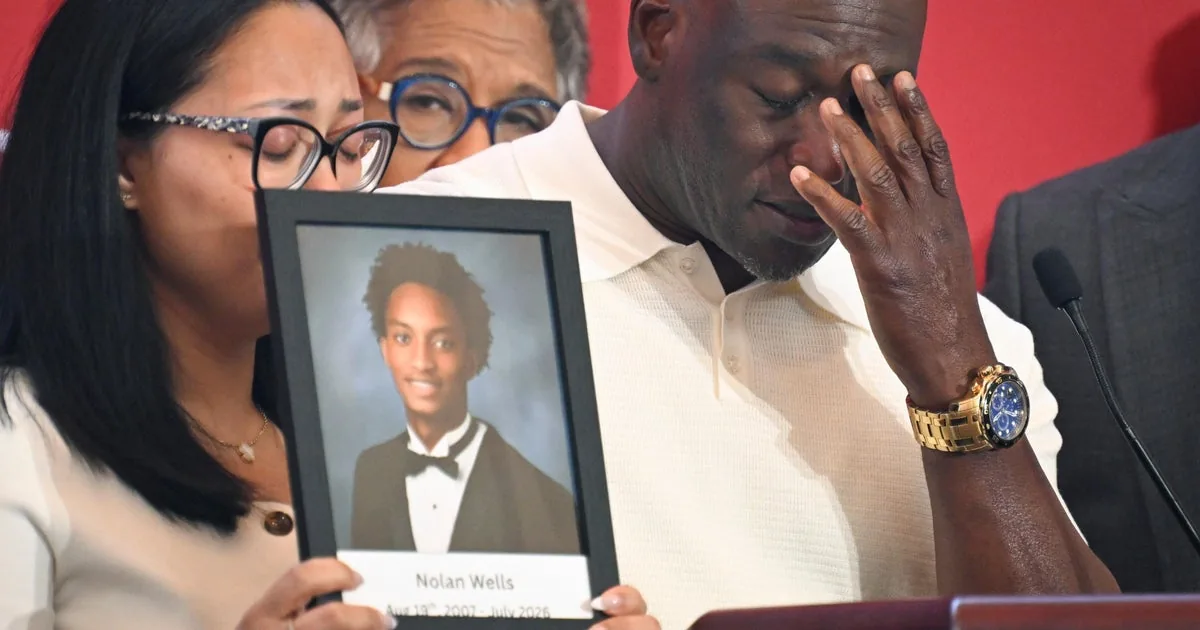
The family also wants McIlrath to release the full investigative file and the complete medical examiner’s autopsy report. In a press conference in metro Atlanta on Tuesday, Crump said the family would keep pressing until they learn what happened to Nolan Xavier Wells.
Questions remain about the Fourth of July trip to Horn Island
Wells disappeared while celebrating the Fourth of July with friends on Horn Island, a barrier island off the Mississippi Gulf Coast. His body was found on the island’s northwestern tip two days after he was last seen.
Investigators said early in the case that they did not suspect foul play, a position that fueled public concern because of Mississippi’s long history of racial violence and civil rights abuses. McIlrath repeatedly promised a fair and thorough investigation.
Wells’ family and their attorneys have questioned why the teen was left behind after friends returned to the mainland. They said he reportedly wanted to stay behind and talk to a girl, and they have also raised concerns about his phone, which was left on the boat.
Police, phones and boat data became central to the inquiry
The boat that carried Wells and others to the island later took on water and was towed partway back to shore. Lawyers for the family have suggested messages on Wells’ phone may have been altered and have questioned why friends were reluctant to turn over his phone and keys.
Lawyers for the friends say those claims are unsupported and that their clients cooperated with authorities. The grand jury said it received materials from Crump’s experts about the contents of Wells’ phone, but its redacted report said nothing supplied by the family pointed to criminal action.
Jurors also said it was not unusual for people to return from the island on different boats than the ones they arrived on, and noted that Wells’ phone was not the only one that made it back to the mainland without its owner that day.
Witness statement, autopsy findings and public reaction keep the case alive
One witness told the grand jury he saw Wells slip awkwardly off the side of a boat around 3:30 p.m. on July 4, but that Wells kept socializing afterward and did not appear injured. The panel said it could not determine whether that fall caused the bruising later found on his body.
An independent autopsy commissioned by the family said Wells appeared to have suffered blunt force injuries to his head and body before death, but it did not identify what caused them. The same report said alcohol was found in his body, though the result was considered highly unreliable because decompositional fluid can affect testing.
After the grand jury decision, McIlrath posted a video criticizing inaccurate speculation online and rejecting claims that the death was racially motivated. Attorneys for three of Wells’ friends said the finding should help clear their clients’ names, even as Wells’ family says their own grief remains tied to unanswered questions.
Sharpton and the family point to Mississippi’s racial history
The case has drawn intense attention partly because of Mississippi’s racial history and the fact that everyone else in the group that traveled to Horn Island with Wells was White. That context has fueled suspicion and online rumor since the teen’s death.
At Wells’ funeral, the Rev. Al Sharpton referenced the state’s racist past, including the lynching of Emmett Till and the assassination of Medgar Evers. In a statement Tuesday, Sharpton said families should not be asked to accept unresolved questions about the death of a young Black person without transparency and accountability.
The grand jury ended its report by expressing sympathy for Wells’ family and saying the evidence convinced jurors of his character. For Wells’ relatives, however, that conclusion has not closed the case. Their attorneys say they will continue seeking a fuller accounting of what happened on Horn Island.